

Third-Party Cloud-Apps’ Cybersecurity Risks in 2022
Cybersecurity Risks of 3rd Party Cloud-Apps in 2022
Healthcare data breaches are at an all-time high. The Ponemon Institute found that 66% of healthcare organizations experienced a breach of patient data in the past 12 months. And due to recent software vulnerabilities and cyberattacks on healthcare companies, we predict these numbers will continue to rise. The crux of the problem is that most healthcare vendors operate as a closed system that doesn’t sync with other systems outside of their ecosystem. If a vendor is breached, it almost always leads to a data breach for its partners. As such, healthcare organizations must modify their current strategy and begin working with third-party vendors who have a vested interest in protecting their sensitive information. Doing so will help cut down on the number of breaches being reported and improve operational efficiency across the board.
3rd party cloud apps are becoming more common in enterprise software as companies look to save money and time by outsourcing their software. However, businesses need to be aware of the cybersecurity risks of using these apps. Companies can use various best practices to protect themselves from 3rd party cloud app cyber risks.
We are excited to announce our white paper- Cybersecurity Risks of 3rd Party Cloud Apps in 2022. We have done the research so that you don’t have to, the white paper discusses the top cybersecurity threats, data breach trends in 2022, and how to stay safe. Download our white paper today to learn about 3rd party cloud apps.
Top 3 Cybersecurity Threats
These are the worst offenders regarding security threats in the healthcare industry.
Malicious Network Traffic- According to a 2019 analysis by Verizon, 81 percent of cybersecurity problems in healthcare are caused by privilege misuse, web apps, and other issues. Even though this form of malicious network activity may not be as well-planned as a full-scale ransomware operation, its presence in the sector should raise alarm bells for healthcare providers.
Ransomware Threat- It prevents or restricts users from accessing computer systems by locking out or corrupting the data until a ransom is paid. Usually, the only way to unlock the system is to pay the ransom, hence the name “ransomware.”
Phishing Scams- Phishing is the process of requesting sensitive information through correspondence that claims to be from a reputable source, such as a mortgage business or official government webpage. This often comprises a personal identification number, login information, and payment information.
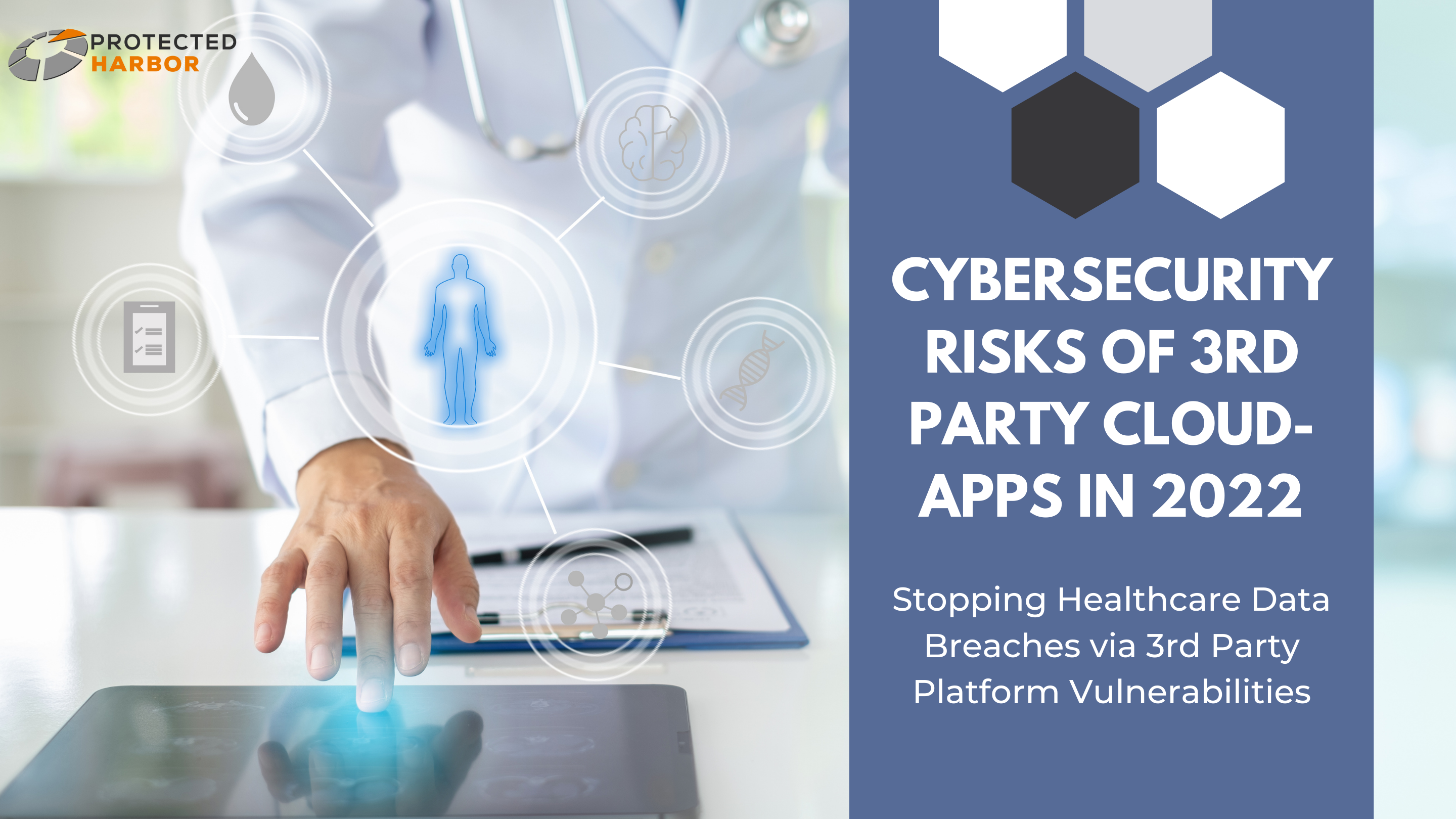
These Are the Data Breach Trends We Expect to See In 2022
- Increased Healthcare Breach Notification Laws- The number of healthcare breach notification laws continues to grow. As such, we expect breach notification laws to become more stringent and begin to include stiff fines.
- The Rise of Cloud-based EHRs- As organizations begin to rely on cloud-based EHRs, we expect data breaches to increase. This is because EHRs are not designed to be safe outside of the organization’s environment. Thus, if a breach does occur, it can quickly spread to other partners and vendors.
- Increased Focus on Software Application Security Organizations that fail to prioritize application security will pay the price. We expect to see organizations place an increased focus on third-party application security and the security within their own applications. -## TOP 10 Largest Healthcare Data Breaches of Q1 2022
Largest Healthcare Data Breaches Of Q1 2022
| Provider | Records Affected |
| North Broward Hospital District | 1351431 |
| Medical Review Institute/ America | 134571 |
| Medical Healthcare Solutions | 133997 |
| Ravkoo | 105000 |
| TTEC Healthcare | 86305 |
As we’ve outlined, healthcare companies have seen a massive increase in data breaches. This is mainly due to SaaS providers’ weak security and inability to protect their customers’ data. Download our white paper to see the complete list of healthcare data breaches in Q1 2022.
SaaS Security Threats in Healthcare
The simplicity, usability, and cost advantages of SaaS (Software as a Service) solutions have encouraged healthcare firms to adopt them at a never-before-seen rate. Every healthcare company, however, needs to be aware of a few risks associated with using third-party apps.
Man In the Middle Vulnerabilities: An app and the hospital backend do not directly exchange data. Data is sent back and forth between the two parties via a communication channel. Bad actors can intercept the data at any point along their transit and potentially harm the backend.
Limited Cloud Infrastructure: Because a cloud-based architecture differs from an on-premises data center, traditional security technologies and tactics are frequently unable to defend it successfully. However, nothing you can do will make your third-party software secure if the foundational elements are not correctly set up.
Lack of Regulations: The usage of health data by third-party apps is primarily up to individual businesses rather than established regulations. Cloud service providers are not regarded as business associates under HIPAA and are not covered by HIPAA. Instead, most third-party apps are covered by the FTC Act’s protections and the agency’s authority.
Data Control Issues: A 2019 National Library of Medicine (NLM) study found that 79 percent of healthcare apps resell or share data. There is no law requiring patient consent for this downstream use, which may raise privacy-related concerns.
Inadequate Due Diligence: Organizations fail to do adequate due diligence on their third-party vendors, leaving them vulnerable to cyberattacks. The Ponemon Institute found that 87% of healthcare organizations fail to perform a third-party risk analysis.
How Can Healthcare Reduce the Risk of Cyber-attacks?
The best method to reduce threats is to prevent them. Often, businesses begin by collaborating with their internet service provider (ISP) and hiring a third-party security risk assessment team. The easiest method to lessen risks within your healthcare company is to follow these cybersecurity best practices: Patch management priorities, least access privilege policies, email, and traffic filtering, and many more. Download the white paper to learn more about how businesses can protect patient data.
Examine Third-party IT and Cybersecurity Practices: Audit all vendors’ third-party IT and cybersecurity practices, including software providers. If the vendors fail to meet security standards, terminate contracts and seek new vendors that meet standards.
Conclusion
With the increase in the adoption of SaaS and other cloud-based software solutions, a vast amount of sensitive data is now stored in the cloud and is thus made more vulnerable to data breaches. Cloud apps are prone to security breaches due to their shared hosting environments.
Cloud apps are the most likely to cause a data breach due to their very nature. Most of them are designed for ease of use, not security. And even those that are secure by design are often hosted on shared servers, making them a security risk.
Even if you use a secure cloud app, there is always a chance that the service provider itself may be hacked, and your data may end up in the wrong hands. Stay connected with us and keep reading our blogs to know about the latest updates about 3rd party cloud apps. In the meantime, you can download and read the white paper Cybersecurity Risks of 3rd Party Cloud Apps in 2022.

 Threat Hunting


 Privilege escalation is a vulnerability used to access applications, networks, and mission-critical systems. And privilege escalation attacks exploit security vulnerabilities and progressively increase criminal access to computer systems. These attacks are classified into vertical and horizontal privilege escalation based on the attack’s objective and strategy. There are several types of privilege escalation attacks, and each of them exploits a unique set of vulnerabilities having its own set of technical requirements.
 The goal of the privilege escalation attack is to get high-level privileges and find entry points to critical systems. There are various techniques attackers use for privilege escalation. Here are three of the most common ones.
 Vulnerability Assessment helps you identify, assess, and analyze security flaws in applications and IT infrastructure. We provide vulnerability assessment services through reliable tools to scan vulnerabilities and give in-depth and accurate final reports.

 Businesses are not reacting promptly to malicious activities. Technology is constantly and rapidly evolving and expanding the attack surface in multiple ways. At the same time, cybercriminals are adapting advanced courses and escalating the threat landscape. They are adopting sophisticated ways to attack, and the struggle to deal with the changes is real. Malicious or unauthorized activities occurring inside your network are causing damage without even you knowing that. How can you detect those malicious network activities inside your network as quickly as possible and respond efficiently to avoid or reduce the potential damage?
 Best practices to prevent malicious activities in a network

 After the coronavirus outbreak, everyone is doing their
  Tell Employees to use Two-Factor Authentication.

 With the advancement in technology, most businesses have shifted online. Due to the rapid technological shift, threats constantly evolve and become more sophisticated. Protecting the IT environment in an organization is critical, regardless of the size. Cybersecurity is the need of every business operating online, and they should take it seriously.


 Organizations’ employees are one of the most significant risks to their cybersecurity, and their negligence is considered the leading cause of data breaches. However, these employees can be a valuable asset for organizations if provided with the required knowledge to identify


 A host of advanced and evolving