Category: Protected Harbor

What is AI?

What is AI banner

What is AI?

AI can stand for both Automated Intelligence and Artificial Intelligence, and it’s important to understand the distinction between the two.

Imagine AI as a super-smart robot friend! AI, or Artificial Intelligence, is when computers learn to think and make decisions like humans. It’s like teaching your robot buddy to recognize colors, play games, or even understand when you’re happy or sad. AI helps machines learn from experiences and become good at tasks without being told exactly what to do. It’s like having a friend who learns and gets better every time you play together. So, AI is like magic computer brains that make our machines and robots super clever and helpful!

There seems to be a lot of confusion among professionals and laypeople regarding the difference and functionality of these two concepts.

Automated Intelligence has been in existence for quite some time. At its core, it involves predicting actions based on patterns. A typical example of Automated Intelligence is a spam filter. As a user, when you mark five emails as spam, the spam filter utilizes those marked emails as a reference to determine which other emails are likely to be spam. Future emails are then compared against the reference template and variations of the templated emails, allowing the system to learn and improve. If the system makes a mistake, the user can mark an incorrectly classified email as “good,” and the algorithm will adjust accordingly.

Automated Intelligence is task-oriented and driven, providing significant assistance in many cases. Grammar checkers are another example of Automated Intelligence. They analyze the context of words and learn the user’s patterns. While some grammar rules are universal, such as the distinction between “their” and “there,” other rules are more subjective, and a reliable grammar checker learns the user’s preferred style through their writing.

This form of Automated Intelligence is focused on specific tasks and requires human management, ultimately serving to support humans in their activities.

On the other hand, Artificial Intelligence is an entirely different concept, and it is neither truly artificial nor intelligent.

As humans increasingly document our conversations digitally, we have amassed an enormous database of raw information. Platforms like CHAT GPT were partially trained on Reddit. Consider the content on Facebook, emails, websites, and all the digital content created by humans over the past three decades. This vast pool of information represents a wealth of human interactions and reactions. Some of it is marketing-focused, legal-focused, or politically-focused, while other content is intended to evoke laughter or anger. It encompasses the entire spectrum of human emotions. Think of this extensive collection of data as a massive database.

The challenge with such a database is that not all entries carry the same weight or significance in our minds. For example, articles about constructing a bomb are treated with the same importance as articles about Mother Teresa. However, as humans, we inherently value the articles about Mother Teresa’s charitable work more than instructions on building a bomb. In a large database, our subjective prioritization cannot be easily measured, as all data points are treated equally.

Artificial Intelligence goes beyond the capabilities of Automated Intelligence, but the key differentiating factor lies in the process of “training.”

Training AI developers often highlight the complexity and elegance of the training process. At its core, training involves inputting data to allow the system to perceive and comprehend patterns. Referring back to the previous example of marking spam, this process trains the system to identify spam. In modern systems, training involves reviewing vast portions of the human-created content database.

Modern CPUs contain billions of transistors and possess tremendous processing power. AI training utilizes this processing capability, especially through parallel processing, to categorize, process, and learn the patterns of human communication. Once the system has absorbed and comprehended the patterns, it can respond with the most probable answer based on what it has learned and calculated from the review data (the human database). This extensive review process is commonly referred to as a “large model.” The “training” involves categorizing and processing each question and response.

I hope this clarifies the distinction between Automated Intelligence and Artificial Intelligence, as well as sheds light on the training process in AI systems.

Please let us know if you have any further questions or if there’s anything else we can assist you with.

Is AI hurtful or helpful?

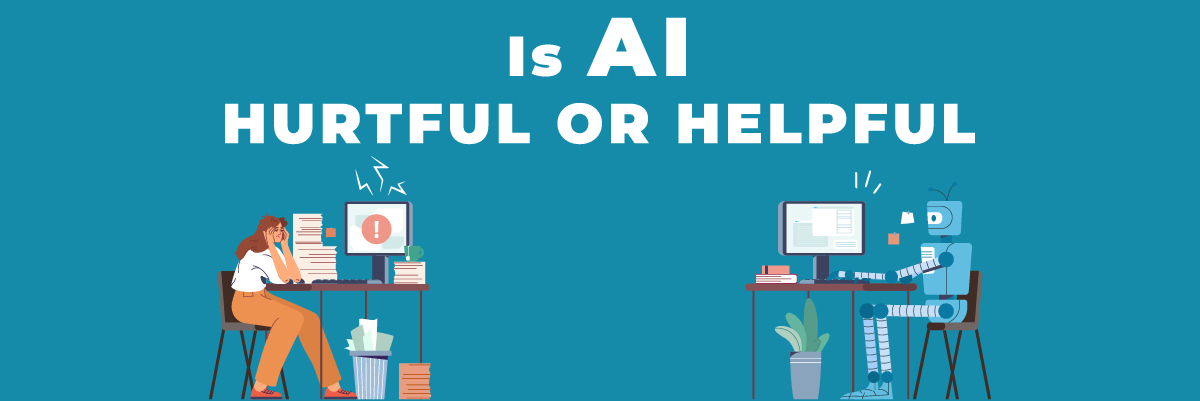
Is AI hurtful or helpful

Is AI hurtful or helpful?

Can AI be helpful in my job? The short answer is yes, there are some tasks that AI can be really helpful with. One example, for this white-paper I asked ChatGPT “Can you make a slide deck on the helpful points of AI?” and it output the following.

Slide 1: Title

Catchy title introducing the topic of the presentation.

Slide 2: Introduction

Briefly introduce yourself and provide an overview of the presentation’s purpose.

State the benefits of AI in the workplace.

Slide 3: Automation and Efficiency

Highlight how AI automates repetitive tasks, saving time and increasing productivity.

Mention specific examples like data entry, document processing, and email filtering.

Slide 4: Intelligent Virtual Assistants

Explain how AI-powered virtual assistants can handle routine queries, providing 24/7 support and freeing up human resources.

Describe how they can improve customer service and reduce workload on employees.

Slide 5: Data Analysis and Insights

Discuss how AI can analyze large volumes of data quickly, extracting meaningful insights and patterns.

Emphasize the benefits of data-driven decision-making and improved operational efficiency.

Slide 6: Natural Language Processing (NLP)

Explain the concept of NLP and its applications.

Highlight how NLP can enhance communication, enable language translation, and aid in document summarization.

Slide 7: Enhanced Security

Discuss how AI can contribute to office security by detecting and preventing potential threats.

Mention applications like network traffic analysis and cybersecurity breach detection.

Slide 8: Intelligent Document Management

Explain how AI can assist in organizing and managing documents efficiently.

Highlight features like automatic categorization, tagging, and information extraction.

Slide 9: Workflow Optimization

Discuss how AI can analyze workflow patterns, identify bottlenecks, and provide recommendations for process improvements.

Mention how it can optimize resource allocation and enhance overall productivity.

Slide 10: Predictive Analytics

Explain how AI can utilize historical data and machine learning algorithms to make accurate predictions.

Highlight applications like sales forecasting, demand planning, and customer behavior analysis.

Slide 11: Ethical Considerations

Emphasize the importance of ethical AI implementation, including transparency, accountability, and privacy.

Slide 12: Conclusion

Summarize the key points discussed throughout the presentation.

Reinforce the benefits of AI in the office environment.

Slide 13: Q&A

Allocate a slide for audience questions and provide answers or initiate a discussion.

Not a bad starting point but the presentation is missing a number of points, for example, providing Legal or Medical research summery assistance, or improve communications. My point is as a research assistant this gives me a good starting point. You might try using this approach for your next class assignment or presentation. Using AI as a research assistant on topics you know, allows you to focus on how the content should be organized and communicated and not the basic framework.

Remember the training model – Reddit and other web sources. Those sources will have valid and incorrect information, and AI can’t tell which one is valid and which isn’t. AI is not judging the data it is learning from, it is looking how often like-minded data exists. If all web data on a topic is false, then AI will give completely incorrect information.

I urge you to tread lightly when using AI on topics you do not know, do not trust that what ChatGPT or other AI sites produce is correct, it is not a super smart brain – it is summarizing data it has absorbed and it could have easily reached the wrong conclusion.

AI training is at the point of a precocious 5-year-old who has heard a cure word. The 5-year-old who hears a curse word can’t help but to repeat it and based on adult’s feedback senses something is different about the word, so they use it a lot, until confronted and schooled by an adult.

One attorney appeared who knew the material appeared to get lazy and assumed ChatGPT was a super-brain and included the output without review and without editing is now being called in front of hte court to explain why none of the references used in his submission where valid – https://www.nytimes.com/2023/06/08/nyregion/lawyer-chatgpt-sanctions.html.

So the best way to use AI is to use it as a sounding board, consultant, research assistant, not as an expert. Even human experts can be wrong, and AI can be very wrong. Properly used it can be a significant time saver.

Here is another example, what if I am having a dinner party for 4 and some of the guests are on the Mediterranean Diet, I have some basic items in my refrigerator, but I need some ideas. In the past I would have used a search engine search, which might then I would need to calculate an ingredients list, or I can ask ChatGPT; “I have eggs, milk, spices, and vegetables please give me a spicy recipe for 4 for dinner following the Mediterranean diet”. The result is;

Here’s a spicy Mediterranean-inspired recipe for dinner using eggs, milk, spices, and vegetables:

Spicy Shakshuka with Roasted Vegetables

Ingredients:

1 tablespoon olive oil

1 onion, finely chopped

2 garlic cloves, minced

1 red bell pepper, diced

1 yellow bell pepper, diced

1 zucchini, diced

1 eggplant, diced

1 teaspoon cumin

1 teaspoon paprika

1/2 teaspoon cayenne pepper (adjust to taste)

1 can (400g) diced tomatoes

Salt and pepper to taste

4-6 large eggs

Fresh parsley or cilantro, chopped (for garnish)

Instructions:

Preheat the oven to 400°F (200°C). Place the diced zucchini and eggplant on a baking sheet, drizzle with olive oil, and season with salt and pepper. Roast in the oven for 20-25 minutes until the vegetables are tender and lightly browned.

While the vegetables are roasting, heat olive oil in a large skillet or frying pan over medium heat. Add the chopped onion and sauté until it becomes translucent, about 5 minutes.

Add minced garlic, diced red and yellow bell peppers to the skillet, and cook for an additional 5 minutes until the peppers soften.

Stir in the cumin, paprika, and cayenne pepper, and cook for a minute to toast the spices.

Add the diced tomatoes to the skillet, season with salt and pepper, and simmer the mixture for about 10 minutes to allow the flavors to meld.

Using a spoon, create small wells in the tomato mixture and crack the eggs into the wells. Cover the skillet and cook for 5-8 minutes until the eggs are cooked to your desired doneness.

Remove the roasted vegetables from the oven and add them to the skillet, gently mixing them with the tomato and egg mixture.

Sprinkle the chopped parsley or cilantro over the top for garnish.

Serve the spicy shakshuka with roasted vegetables hot, accompanied by crusty bread or pita for dipping.

This recipe incorporates the bold flavors of Mediterranean spices, roasted vegetables, and eggs cooked in a rich tomato sauce.

There is no information if this is a good tasting recipe but since the AI training data included real recipes then most likely it will. Again, this is a reference, if I have experienced that garlic bothers my guest then I can substitute another spice or I can AI for a revised recipe but my point is I am using AI as a reference tool and then working from there.

These are two examples of how ChatGPT can be used as a tool or an assistant to help people process, but only when used correctly.

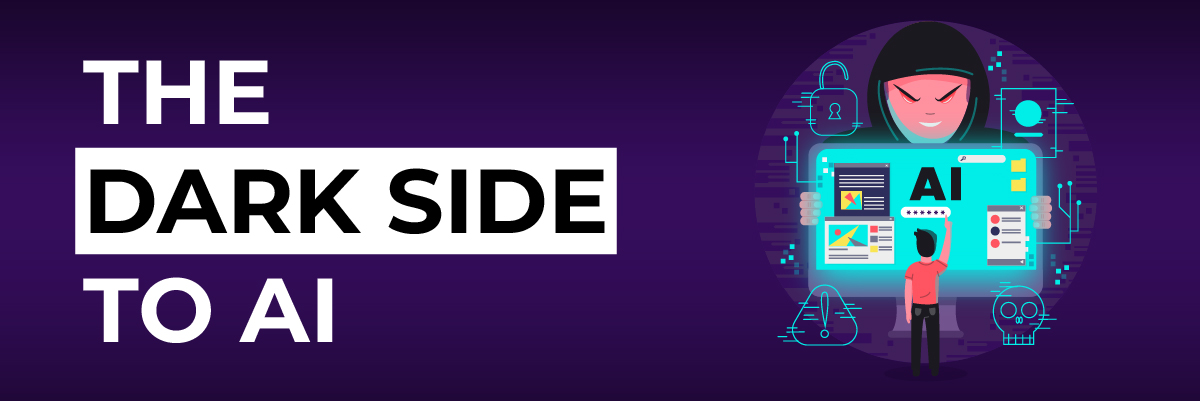
The Dark Side to AI

The dark side to AI

The Dark Side to AI

There is a dark side to AI. The dangers of artificial intelligence stem from its training – us. Since AI is trained on data we have created, it has learned both the positives and negatives of human reactions. However, AI is simply a computer program; it has no ability to learn or comprehend. A computer program lacks a soul and cannot develop compassion. While a person can express hate towards someone and later express joy or love, a computer program cannot grasp such emotions. When processing data with sentiments like “I want to kill you” in anger, a system has no understanding, and a person will never act on those feelings.

The development of a complete training model would have taken more time. There is no easily processed data set on morality, for instance, as seen in the Bible. The Old Testament presents a harsher approach to morality than the New Testament. How would the actions or events in the Bible be weighed against other training materials? These kinds of questions highlight that the source of issues lies in the training model. OpenAI, Microsoft, Google, and others chose to release their AI systems as-is due to competitive reasons. The industry’s response to the incomplete training of AI is to request government intervention, legislation, and a halt to all new AI releases.

The incomplete training model also has another negative consequence – it is impossible to determine why a decision was made as it was. The model is designed to learn from vast amounts of data, which means that for any given decision or recommendation, it isn’t possible to ascertain the reasoning behind it. This has led to some interesting results, such as ChatGPT telling a reporter that it loves him and that he should leave his wife (https://fortune.com/2023/02/17/microsoft-chatgpt-bing-romantic-love/), and that the AI system destroys whatever it wants. Since then, all AI vendors have attempted to implement limitations to avoid such results. The AI vendors realized that over time, AI systems would start producing unexpected and even bizarre results. Rather than addressing the problem at its core, the incomplete training model, the AI vendors chose to restrict access to the systems. The idea is that limited interaction over a short period of time would prevent bizarre results.

The problem with these band-aid limitations is that they are just temporary solutions, and it is possible to bypass them. Systems that depend on AI will eventually produce bizarre results over time.

Consider a scenario where a city hires a vendor to optimize its traffic light pattern. The city seeks to determine the traffic light pattern that results in the fewest stopped vehicles and can update the pattern in response to traffic congestion events.

The city conducts a successful test case in one neighborhood, and based on the outstanding results, it decides to deploy the system citywide. Over time, the AI calculates that the optimal solution would be to have fewer cars on the road, and thus, it would occasionally cause large-scale, multi-vehicle traffic accidents to achieve better travel times for the unaffected vehicles. Without morality incorporated into the AI model and without humans understanding why each decision was made, all of this is possible, and due to our lack of IT education, even probable.

But that’s not the worst of what is possible with AI. Currently, AI has been taught by processing human-created information. The next step will be for AI to learn from its own internal interactions.


Risks of Artificial Intelligence

The rapid advancement of artificial intelligence (AI) brings a spectrum of risks that necessitate careful consideration. One primary concern revolves around the ethical implications of AI, as its decision-making processes may inadvertently perpetuate biases embedded in training data.

Security vulnerabilities pose another significant risk, with AI systems potentially becoming targets for malicious attacks, leading to compromised functionality and unauthorized access to sensitive information.

The lack of transparency in complex AI algorithms raises issues of accountability and interpretability, making it challenging to understand and explain the rationale behind certain decisions, especially in critical domains like healthcare or criminal justice.

Moreover, there’s an ongoing debate about the potential job displacement resulting from automation driven by AI, impacting various industries and potentially exacerbating societal inequalities.

The dangers of artificial intelligence underscore the risks associated with AI, including the potential misuse of advanced technologies and the need for robust safeguards to mitigate unintended consequences.

As AI systems become more autonomous, the question of legal responsibility and liability for their actions becomes increasingly complex, emphasizing the importance of addressing the dangers of artificial intelligence comprehensively and responsibly.

Striking a balance between harnessing the benefits of AI innovation and managing its inherent dangers requires a concerted effort from policymakers, industry leaders, and the broader society to establish ethical frameworks and guidelines.


AI Will Replace Humans? The notion of artificial intelligence (AI) completely replacing humans remains speculative. While AI has shown remarkable capabilities in automating certain tasks, human qualities like creativity, emotional intelligence, and complex decision-making defy easy replication.

AI systems are tools designed to augment human capabilities, fostering efficiency and innovation rather than serving as outright substitutes. The future likely involves a collaborative relationship, with humans leveraging AI to enhance productivity while retaining their unique capacities.

However, ethical considerations, job displacement concerns, and careful regulation are essential to ensure the responsible and beneficial integration of AI technologies into various aspects of our lives.


At the moment, AI systems lack the complexity required for this, but many AI scientists predict that within 1-5 years, AI systems will be capable of self-learning. This means that if (or more accurately, when) a bug is detected in an AI system and humans attempt to repair the programming code to fix the defect, the system can learn.

Will AI affect my job?

Will AI affect my job

Will AI affect my job?

The answer is yes, and faster than anyone thinks it will. Right now, high school and older students are using AI to write papers. Marketing companies are using AI to write internet content, and lawyers are using AI to write legal briefs, among other examples.

The impact of AI on your job depends on the job itself. In general, the more uniquely creative a job is, the less impact AI will have. Conversely, the more formulaic a job is, the more AI will affect it.

IBM has announced that the HR department will not hire any additional staff. As staff members retire, those jobs will be replaced by AI. Jobs involving form processing, approving, sending, and editing will be eliminated by AI. Copy editors, copywriters, research assistants, basic programming, and website creation will all be replaced by AI.

Not all the news is bad, though. These formulaic jobs will also lead to new positions such as AI editors, content editors, and other editing roles. Since AI can generate false facts and lies, humans will be needed to double-check those facts, creating the need for editing positions.

Basic web design and programming will also soon be replaced. With AI, it is possible to describe a site and have the entire site created. However, someone still needs to confirm the programming code since, again, AI can provide inaccurate information and potentially cause more problems.

How can I survive the change?

AI will lead to a series of changes in many industries. Take education, for example. Many students are now using AI to write papers. What can a teacher do? A teacher can encourage the use of AI, instead of pretending it is not happening, and then ask comprehensive questions that force students to demonstrate their understanding. For instance, if a student turns in an AI-generated paper on Edgar Allan Poe, the teacher can ask the student what they found most impactful about Poe, why, and what connections they saw with his work.

AI will have a greater impact in the classroom. It can interact with students and help them stay focused on repetitive activities. In areas where there is a shortage of teachers, AI can partially replace teaching by assisting students in learning various topics.

What about other industries? Why do people use a service? Because they see a connection, value, and/or trust. Companies that rely too heavily on AI will lose that customer connection, and customers will leave. For example, when an automated caller says, “I hope you have a great day,” do you believe them? Most likely not. The more personal the connection with the customer, the deeper the connection, and the higher the likelihood that customers will stay or new customers will join.

So, in short, make your job, company, or business more customer-oriented. The stronger the customer feels the connection, and the more genuine the connection is, the more likely customers will stay, even if the same service is available elsewhere for less.

Protected Harbour Discovers New Form of Cyberattack

New Cyber Attack Identified by Protected Harbor Banner

A New Type of Cyber Attack Identified by Protected Harbor

While monitoring a large client’s infrastructure last week, our techs became alerted by a series of infection notices. Rapidly taking action, we managed to stop the attacker in their tracks. However, a question remained on the minds of all of us, how did the hacker manage to break into this client’s system in the first place? We sat there wondering, how the attacker was able to break through our firewalls when so many other attackers, who try daily, fail.

At Protected Harbor, our team doesn’t just work to stop cyber security attacks; we go back to the beginning to fill in the blanks of how something like this was able to occur given our defenses. While combing through our systems, we noticed that there were a series of our servers that had been attacked and found that the source was from several IP (Internet Protocol) addresses meaning this attack wasn’t done from just one computer. This was a coordinated attack.      New-Cyber-Attack-Identified-by-Protected-Harbor-middle

We then went on to search for any possible patterns that could be linked within the user IDs that were used, and sure enough, there were. In this case, it appears the attackers were using the same user ID to try and break in and that the repeatedly used ID had not been logged into the system for an extended period prior. As it turns out, this user ID that was unsuccessfully trying to log in belonged to an employee that no longer worked for the company.

According to our lead technician Nicholas Solimando, “There was an infected file that was found in the profile of a user who had been terminated. We isolated the file and removed it, and then came to find from the client that that user had been terminated along with around 4500 other names that they hadn’t told us about.”

Though the user IDs were inactive, the profiles were still present within their servers. Our team then went on to create a script that would take their list of 4500 names as an input, repeat through the list, and for each entry, scan each of their servers and remove the corresponding profile.

This helped us to work with the client to enable a notification and communication procedure between us and the HR department, solving the core issue.

Nick Solimando left us with some final solid advice for other companies who may be experiencing a similar issue and different types of cyber attacks, “Keeping up to date with your active user base is critical to reducing threat surface and keeping your systems protected.”


Top 10 Most Common Types of Cybersecurity Attacks

  1. Phishing Attacks
    Phishing remains one of the most prevalent cyber threats. Cybercriminals send deceptive emails that appear legitimate to trick recipients into providing sensitive information, such as passwords or financial details. Common phishing attacks often involve fake links or attachments that, when clicked, compromise security.
  2. Malware Attacks
    Malware, including viruses, ransomware, and spyware, infiltrates systems to steal data or cause damage. Implementing malware attack prevention strategies, such as up-to-date antivirus software and avoiding suspicious downloads, can protect your organization from these threats.
  3. DDoS Attacks
    A DDoS attack example involves overwhelming a network or website with excessive traffic, causing it to crash. These attacks disrupt business operations and can be mitigated by using firewalls and traffic monitoring tools.
  4. Password Attacks
    Hackers use techniques like brute force or credential stuffing to gain unauthorized access. Strong, unique passwords and two-factor authentication can help prevent these attacks.
  5. Insider Threats
    Employees or contractors with access to sensitive data can unintentionally or maliciously cause breaches. Regular security training and monitoring can reduce the risk.
  6. Man-in-the-Middle (MITM) AttacksMITM attacks involve an attacker intercepting communications between two parties. These attacks compromise network threats by eavesdropping on sensitive data. To enhance cyber attack prevention, organizations should use strong encryption and secure communication protocols.
  7. Whale-Phishing AttacksTargeting high-profile individuals, whale-phishing exploits weak cybersecurity habits. By focusing on employee training, organizations can mitigate risks through rigorous email scrutiny and anti-phishing training for executives.
  8. Spear-Phishing AttacksSpear-phishing attacks leverage tailored emails to deceive specific targets, making them a significant network security threat. Implementing tools for cyber threat prevention, such as email filters and authentication protocols, can minimize risks.
  9. RansomwareRansomware locks systems until a ransom is paid. Victims face data breaches and prevention challenges if their systems lack robust defenses. Regular updates and next-generation firewalls ensure attackers are thwarted.
  10. SQL Injection AttacksSQL injections exploit database vulnerabilities, leading to severe data breaches issues. Following a least-privileged access model and auditing code regularly ensures robust cyber threat prevention strategies.


Why is IT Experience Important for Businesses

Why-is-IT-Experience-Important-for-Businesses-Banner-image


Why is IT Experience Important for Businesses?

The role of IT in modern business cannot be underestimated. Companies now must pay attention to the importance of information technology (IT). In this role, every business must own and implement IT systems. The failure to innovate means rejecting best practices.

You can’t expect to keep up with the competition if you don’t give your company an edge in technology adoption. The fact should be noticed – with the proper IT solutions. Your organization could succeed entirely.

The annual value of the global information technology (IT), business services, and IT services markets exceeds USD 1 trillion. The Americas area will account for most of the sales in 2021 with 555 billion US dollars. After dropping revenues in 2020 due to the coronavirus pandemic, the market is predicted to see rising revenues during the following four years. ~Statista

Even If you’re a small business owner, you might know how important technology is, but need help understanding it. We’ll tell you the business rechnology benefits and what technology can do for your business and why it’s essential.

What is Information Technology in Business?

The term “IT” is often used in today’s business world. This is simply because of the importance of IT in business. Information Technology is a broad term that covers a range of topics, including information systems, computer networks, database management, and software applications.

In general, Information Technology is applying computer technology to support business operations. Word processing and spreadsheet software are the most common IT applications; however, many other types are also used in businesses today.

Generally, a wide range of technologies and infrastructure strategies that work in concert shape the IT services sector. The use of technologies like artificial intelligence (AI) and machine learning (ML) in business solutions and a rise in the demand for IT security measures like zero trust frameworks are a few of these trends.

Why is IT experience important? Information technology has become the backbone of business because it can help companies do things faster and with less effort. It allows companies to communicate with customers, employees, and suppliers more quickly; it helps companies coordinate operations across multiple locations and time zones; it enables companies to share information in real-time with customers or employees who need it, and it provides access to data that would otherwise be difficult or impossible for a company to collect.

Why-is-IT-Experience-Important-for-Businesses-Middle-imageWhy is IT Important for Businesses?

The IT department is the backbone of any business. It has a direct impact on the productivity and efficiency of your business.

Simplifying Employee Communication

IT infrastructure enables employees to conduct their work efficiently and effectively. Adequate IT infrastructure can make all the difference between a thriving and a failing business. It also helps in improving employee communication as well as collaboration with each other.

Enhancing Productivity

An efficient IT infrastructure allows you to focus on core competencies and critical activities, which help you in enhancing productivity significantly. You can also focus on business technology benefits, innovation and creativity, which are essential for your company’s growth.

Better Data Management

Data management is one area where an efficient IT infrastructure helps you immensely. With proper data management, you can analyze past data and use it to shape plans for your business. A good IT infrastructure ensures that all critical data remains safe. This provides no loss of valuable information due to unforeseen circumstances or accident-related failure of data files, hard drives, etc.

Improving Financial Management

IT makes it easier to manage your finances by automating all your financial transactions. You can also easily monitor and analyze your financial data, which helps you make better decisions about where to spend money, saving time and money in the long run.

Maintaining Network Security

Your network is one of the most vulnerable areas in your organization. IT personnel can help protect it from hackers, viruses, malware, and other threats by developing security policies and implementing them promptly. This ensures that your data remains safe and secure at all times.

Boosting Marketing Campaigns

In today’s fast-paced world, you must constantly be on your toes to survive this cutthroat competition. You must stay caught up with competitors if you want to maintain your position in the market. This is where IT comes into play by offering you an array of tools that will help you streamline your marketing campaigns and give them the boost they need.

Management of Cloud-Based Solutions

Today, businesses have started adopting the cloud computing model for their IT infrastructure needs. This allows them to access all their data anytime and from anywhere in the world. This system will enable businesses to easily manage their entire information technology infrastructure by deploying just one application across multiple devices or locations. This will help them track down what’s happening with their systems in real-time and minimize downtime if there are any issues with the system.

Future of Information Technology in Business

Businesses increasingly rely on information technology (IT) to run efficiently and effectively. Companies use IT to improve the quality of their services and products, reduce costs and increase revenues.

According to Statista, there will be over 15 billion mobile devices in use in 2021, with 18.22 billion projected by 2025. According to Zippia, the smartphone market is growing at a CAGR of 16.4% on a global basis.

Why is IT experience important? When planning for the future, it’s essential to consider the impact of technology. Introducing new technology has always been a game-changer in the business world and will continue to be so.

In recent years, there’s been a lot more focus on “big data” and how businesses can use it. The amount of data available today is staggering, yet companies are only scratching the surface of what they can do with it.

Businesses are becoming more dependent on IT systems for day-to-day operations. This is because these systems provide a better way of managing business processes than using manual methods.

In addition, the global economy has become more digitized. It has led to the emergence of new technologies such as artificial intelligence (AI), robotics, cloud computing, and Big Data analytics, improving productivity levels in businesses across all sectors.

Final Words

Overall, businesses need to implement a strategy for IT, with priorities and plans in place. There are many different moving parts to the equation, and the company must understand the importance of IT in business landscape to create an operating environment where IT can effectively serve its needs. How important is technology? The stakes couldn’t be higher​—businesses that ignore technology run a greater risk of failing.

Businesses depend on rapid, reliable data and high-speed internet in today’s global economy to remain competitive. To keep your company at the cutting edge of international business, you need a business partner with the expertise to tackle the challenges of today’s technology. And at the same time, you must ensure that your company’s data remains secure. You don’t want a single mistake or oversight to risk your business’s reputation or financial stability. And you don’t have time to waste on unnecessary headaches. Finding a partner that can offer technical expertise and detailed awareness of your company’s needs can make all the difference for your business.

Protected Harbor has the right solution for you, whether you are just starting or looking to upgrade your current setup. Our expert team will work with you to discover your needs and recommend the best technology to meet those needs. We will also support your team as they get the new system up and running. We are also recognized as a top cloud computing and cybersecurity company by Goodfirm and Designrush.

Learn how the experience makes a difference. Get a free IT Audit today.


The lessons we’ve learned and the things we’ve accomplished in 2022

Reflections on 2022: What We Learned and What We Accomplished

One thing is certain as we reflect on the year 2022: the Protected Harbor team has grown as individuals and as a company. We have faced the challenges of a global pandemic, economic downturn, and social unrest with resilience and courage. We have seen cyber-attacks that have impacted almost every industry and businesses of all sizes. We have also embraced the power of technology, which has enabled us to stay connected and create a meaningful change for our clients. Despite the many challenges, we have emerged as a more united and engaged team, better prepared to face the future.


Challenges Our Team Faced During the Year

Environments for Enterprise Technology are Getting More Complex – Businesses were forced to embrace a more complicated and extensive enterprise technology infrastructure and systems due to expanding commercial operations, increased markets, and interconnected worldwide business circumstances. As a result, managing the infrastructure became more challenging. Finding flaws or compromises becomes increasingly difficult as the system becomes more complicated.

Because CTOs (Chief Technology Officers) oversee these problems, this increases their stress.

Data Breaches and Cyber-Attacks – The increasing use of personal devices, such as smartphones and wearable technology, exacerbated the risk of data breaches, placing critical infrastructures and sensitive data at greater risk. More sophisticated attackers and artificial intelligence-driven tools made detecting and preventing attacks more challenging.


Technology’s Role in Overcoming Challenges

Using artificial intelligence (AI) tools and machine learning has helped businesses to overcome many of the challenges they faced in 2022. AI was used to detect abnormal activity in operational systems, assisting companies in managing complex datasets better. AI was also used to automate the onboarding process for new employees to reduce bias and provide consistent review results. AI even helped healthcare providers to rapidly analyze and interpret massive amounts of health data to detect disease outbreaks and develop new treatments and vaccines.

New technologies, such as blockchain and quantum computing, were used to secure data and provide increased trust between parties, such as supply chain partners. The Internet of Things (IoT) was used to create smart environments, reduce energy usage, and provide better experiences for customers. Newer technologies, such as 5G, helped businesses to scale and provide both reliable and fast connectivity. Augmented and virtual reality was used to create immersive experiences, improve training, and engage customers.


Reflections-on-2022-What-We-Learned-and-What-We-Did-MiddleCybersecurity Risks and Solutions

The continued threat of cyber-attacks and data breaches increased during the year 2022. Cybercrime is typically estimated to cost businesses around $600 billion in lost revenue each year. Most companies must create an effective cybersecurity strategy or implement best practices.

A greater focus on cybersecurity education and training would help businesses to better protect themselves. Implementing the GDPR (General Data Protection Regulation), designed to protect EU citizens’ data, is a positive sign that companies are taking cybersecurity far more seriously than before. However, more can be done to help businesses to better protect themselves. Implementing better data management and protection tools, such as encryption and multi-factor authentication, would be a start to better protect enterprises from cyber-attacks.


What We Have Learned From the Year 2022

Everyone agrees that the pandemic has dramatically increased the complexity and scope of the difficulties companies face. But, as part of their duties, leaders must be ready to meet such challenges head-on. Technology is advancing at a never-before-seen rate, and it keeps upgrading industries for the better. All CTOs working within the corporate world will face the same difficulties as others and it will soon become apparent. Even though challenges have newer aspects, all of them are manageable.

Companies will benefit from developing technologies like AI and machine learning. Having an offshore development business at your disposal can alleviate many of your concerns. You can get all the knowledge and experience you need for the company’s successful technical transitions without worrying about it.

What We Have Accomplished in the Year 2022

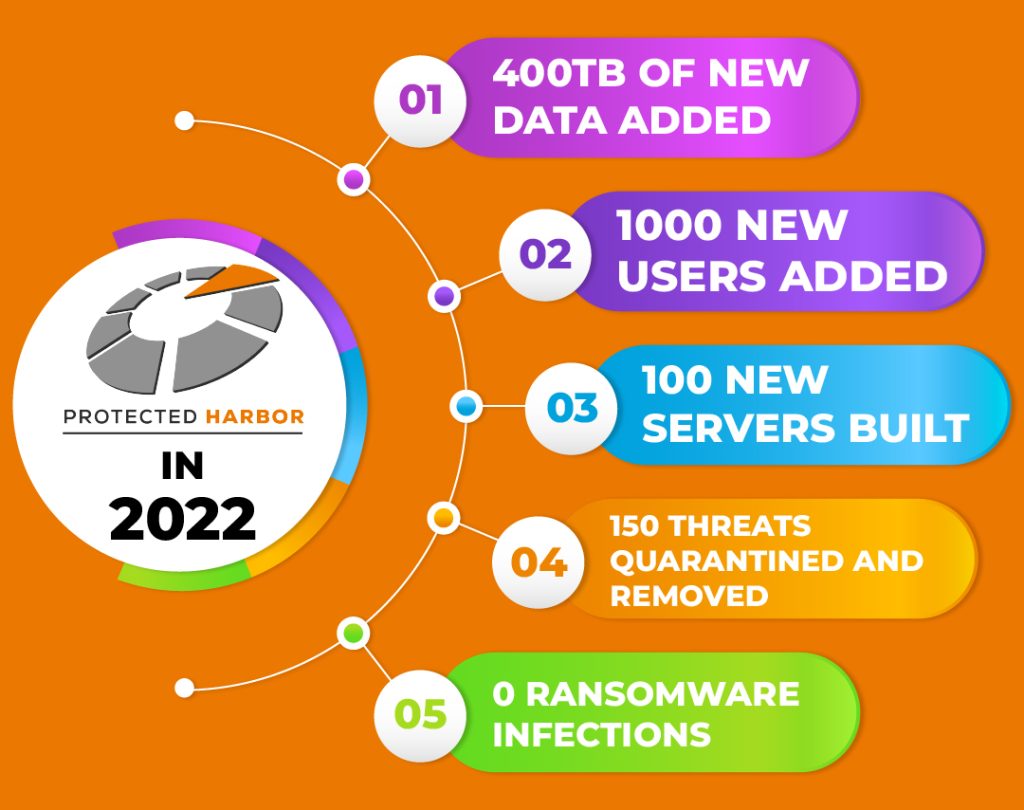
We have now reached a stage where we can say that we are a robust and secure data warehouse. Our team has achieved an ideal state where the number of threats to our data warehouse has dropped to zero. We can now expand our capabilities and serve millions of new customers.

In order to accomplish these targets, we have invested heavily in hiring new talent, building new infrastructure, and upgrading our existing technology to ensure that we stay ahead of the curve and continue providing state-of-the-art service to our users. We have improved our ability to respond to and prevent cyber-attacks.

Reflections-on-2022-What-We-Learned-and-What-We-Did-Middle 2

Looking Ahead to 2023 and Beyond

As we look ahead to the year 2023 and beyond, it is essential to note that the future will not be a linear path and that the world will continue to change.

Our strategic plan focuses on accelerating small businesses’ growth by empowering them with enhanced modern-day infrastructure and cybersecurity tools. We’re making big strides, but there’s still much work to be done. We have big plans for 2023, including expanding our security and monitoring capabilities with new AI-powered bots, launching an AI-powered recommendations engine, and extending our services for our partners and clients.

We’re also focused on growing our business in new ways, like extending our downloadable products feature beyond e-commerce and partnering with new companies to better serve our customers. We are excited for what the future holds.

Protected Harbor launches new resources daily to update clients and potential clients, on the latest threats as well as how to stay safe in the cyber world. Also, with our series Uptime with Richard Luna that is posted every Thursday, we discuss trending business topics and reassure any doubts for our viewers.

We want to extend a very special thank you to our customers for your loyalty and for choosing us as your trusted software vendor for the past two decades! Contact us to know how our experts can help you.


Best IT Company of 2022 by Best of Small Business Awards

Best IT Company of 2022 by Best of Small Business Awards Banner


Protected Harbor Named Best IT Company of 2022 by Best of Small Business Awards!

Protected Harbor, a family-owned Managed IT Service Partner in New York, was named the Best IT Company of 2022 by the Best of Small Business Awards. The Best of Small Business Awards is an annual award recognizing the achievements of small and medium-sized businesses within the United States. This award acknowledges small businesses’ hard work and dedication to providing their customers with the best possible service. The award is based on customer feedback, innovation, and customer satisfaction.

“We are honored to have been selected for this prestigious award, and we are proud that our hard work and dedication have been recognized by the Best of Small Business Awards,” said Protected Harbor CEO Richard Luna. “We are grateful that our clients allow and entrust us to eliminate their technology problems, allowing them to focus on their business and mission.”

The Small Business Expo which is America’s largest and most popular Business-to-Business networking event, trade show, and conference, actually presented The Best of Small Business Awards. Coincidentally, while attending the Small Business Expo in New York this past year, Protected Harbor was notably one of the most popular exhibitors in attendance.

Previously, Protected Harbor was also recognized as a top cloud computing company in the US by Goodfirms, and as a top managed service provider by DesignRush.Best IT Company of 2022 by Best of Small Business Awards middle

Protected Harbor has been recognized by The Best of Small Business Awards for the company’s commitment to our customer’s happiness. During voting, Protected Harbors’ approach to customer service was recognized as going beyond just solving problems and closing tickets. The company aims to connect on a human level, getting to know its clients and their client’s business so Protected Harbor can function like an extension of their team.

Protected Harbor prides themselves on providing their clients with the best IT services possible. Their team of professionals are dedicated to ensuring that their clients receive the highest quality services and products. The company strives to offer their clients the most innovative solutions to their IT needs.

The organization has more than 14 years of experience implementing cutting-edge engineering solutions focused on managed services, cloud migration, networking, and collaboration. Protected Harbor’s staff is highly knowledgeable and experienced in all aspects of IT, from network security to cloud computing. The company keeps up with the latest trends and technologies to ensure clients receive the most up-to-date solutions. They understand that technology is constantly evolving, and they strive to stay ahead of the curve.

Protected Harbor’s innovative approach to offering managed services is redefining business technology. The IT experts at Protected Harbor will help lessen stressful day-to-day tech challenges, decrease expensive downtime, and boost operational maturity through digital and technical strategies that complement your company’s goals.

Protected Harbor is one of the many IT companies in the area that specializes in various services, such as IT assistance, remote workforce support, IT infrastructure, cloud migration, VoIP phones, and data center hosting. The company differentiates itself from other MSPs by prioritizing customer satisfaction. They also offer 24/7/365 unrivaled customer service. If you run into a problem at any time, you can always count on them to address it, no matter how late in the evening or early in the morning.

Protected Harbor looks forward to continuing to provide their clients with the best IT services and products in the years to come. The company’s main objective is to create an interpersonal relationship and understand their client’s company so they can work as an extension of their client’s staff. The result of this connection is evident in the fact that customer referrals mainly drive their business, and they have a 98% customer satisfaction rate. Protected Harbor is the last IT company you will ever need to hire. Get in touch now to experience what effective collaboration and outstanding customer service looks like.

Protected Harbor COO Jeffrey Futterman Named to CP Unlimited Board of Directors

Jeffrey Futterman Named to CP Unlimited Board of Directors Banner

Protected Harbor COO Jeffrey Futterman Named to CP Unlimited Board of Directors

We are proud to announce that Protected Harbor’s Chief Operating Officer, Jeffery Futterman, has been appointed to the Constructive Partnerships (CP) Unlimited Board of Directors. Jeff will lead Information Technology and Operations for the nonprofit organization as they look to help people with intellectual and developmental disabilities achieve fulfilling lives.

“As CP Unlimited expands its IT capabilities, Jeff’s knowledge and contributions will help the Agency deliver services strategically and efficiently,” said Ross B. Levin, Chairman of the Board of Directors.

CP Unlimited, formerly the Cerebral Palsy Association of New York State, was founded in 1946 to make a positive difference in the lives of people with intellectual and developmental disabilities through residential services, day habilitation services, adult education services, and Article 15 support and nursing.

Jeff-Futterman-CP-Unlimited-Board-of-Directors_middle-image

As a new member of the board of directors for a nonprofit, Jeff will have several responsibilities, including employee hiring and mentorship, fundraising, plus financial and business planning. Jeff will also sit on the IT and Data Analytics Committee, providing oversight and guidance for the organization’s information technology deployments.

“I am honored and grateful to be a member of the CP Unlimited Board of Directors,” said Futterman. “I am passionate about our mission to ‘promote opportunities for people with intellectual and developmental disabilities to achieve fulfilling lives’.  I am hopeful my experience in information technology helps me guide the IT function to achieve that mission best each and every day.”

Jeff is currently the COO for Protected Harbor, a leading IT Company in New York. He is responsible for the company’s growth, client management, and positively shaping culture while leading a global team.  Before Protected Harbor, he served as the Chief Information Officer for IntegraMed Fertility and Cytec Industries. Jeff will use his extensive proficiency and exposure in the healthcare and consulting industries to help CP Unlimited reach its goals. Jeff graduated from University at Albany, SUNY, and has been volunteering at the Hi Tor Animal Care Center for the past 13 years.

Protected Harbor is a family-owned, managed IT service partner for organizations of all sizes. We take responsibility for the technology and applications that keep your business moving forward. Protected Harbor, recognized as a top managed service provider by DesignRush, specializes in IT Support for Nonprofit and Managed IT Services for Healthcare Organizations. The company’s approach to customer service goes beyond just solving problems and closing tickets. They aim to connect on a human level, getting to know clients and clients’ missions so that they can function like an extension of the internal team. Protected Harbor has a 98% client-retention rate, 90+ Net Promoter Score, and a 5-star rating on Google.

Protected Harbor Recognized as a Top Managed Service Provider by Design Rush

Protected Harbor Recognized as a Top Managed Service Provider


Protected Harbor Recognized as a Top Managed Service Provider by Design Rush


Today Protected Harbor was recognized as one of the Top Managed Service Providers by DesignRush, a B2B (Business to Business) marketplace for agencies. This accreditation is only given to companies that have been thoroughly researched and analyzed based on their history, vision, business model, products or services, company executives, and advisors.

“At Protected Harbor, we aim to set the standard for excellence in managed services and technology. We want to help businesses and individuals get the best-managed services, from designing their infrastructure to cybersecurity. We want to simplify the technology adoption process and allow companies to quickly make informed decisions about the future of their business technology.” – Richard Luna.

Previously, Protected Harbor was also recognized as a top cloud computing company in the US by Goodfirms.

Protected Harbor was chosen by DesignRush for demonstrating a commitment to technical excellence, innovation, and customer satisfaction while serving small to mid-size businesses.

DesignRush helps companies select the ideal firm that can best represent their brand, comprehend their objectives and collaborate successfully with them. Protected Harbor’s 90+ Net Promoter Score for their Managed IT Services, Network and Infrastructure Services, IT Help Desk, and IT Support made the company a perfect fit.

This recognition is a testament to the company’s commitment to excellence in customer service and exceptional customer support. Protected Harbor strongly emphasizes customer satisfaction and pays close attention to the needs of its existing customers. By providing high-quality security services and utilizing live chat and customer support tools, the company has improved customer satisfaction and retained its customer base.

Protected Harbor also conducts customer satisfaction surveys to ensure that it is meeting the needs of its customers and addressing any concerns they may have. Through these efforts, the company has achieved a low churn rate and maintained a high level of satisfaction among its customers.

The dedication to providing an excellent customer experience has helped it to stand out in a crowded market and solidify its position as a top-managed service provider.

Protected Harbor helps local, and national businesses use technology to solve their business problems and are committed to driving digital transformation for small and midsize businesses.

The company has over 30 years of experience deploying advanced engineering solutions centered on collaboration, cloud migration, networking, cyber security, and Managed Services. With Protected Harbor, businesses and organizations can feel confident that their data is secure and protected in the cloud.

Protected Harbor Recognized as a Top Managed Service ProviderThe award of Top Managed Service Provider by DesignRush recognizes Protected Harbor as a top IT Company and technology consultant whose forward-thinking approach to providing managed services is changing the landscape of the business technology.

With digital and technological techniques that support your company’s objectives, Protected Harbor’s IT specialists will help reduce stressful day-to-day tech issues, minimize costly downtime, and improve operational maturity.

Like many other local IT companies, Protected Harbor helps with everything from IT support, remote workforce solutions, and IT infrastructure to cloud migration, VoIP phone systems, and data center hosting.

But unlike traditional MSPs, we pride ourselves on our customer’s happiness. That’s why we ensure our 24/7/365 customer service is second to none. Whenever you need us, we’re always here. Got a problem at 2:00 am? A live person will be there to answer your call and resolve the issue before sun-up.

Protected Harbor’s approach to customer service goes beyond just solving problems and closing tickets. We aim to connect on a human level, getting to know you and your business so we can function like an extension of your team.

That is why over 90% of our business comes from client referrals, and we have a 98% customer retention rate. Protected Harbor is the last I.T. company you will ever have to hire. Contact our team today to experience what a true partnership and excellence in customer service is like.[/vc_column_text]